Name: Nurse Shark |
Scientific name: Ginglymostoma cirratum |
Range: |
Habitat: Shallow water, less than ten feet in depth. Can be found lying motionless in the bottom of the water with a its headin a cave or under coral formations. |
Status: Not threatened |
Diet in the wild: invertebrates and small fish--Crabs,shrimp, squid, and sea urchins. |
Diet in the zoo: Frozen fish mackerel, smelt, and herring(twice a week). |
| Locationin the zoo: JamesR. Record Aquarium |
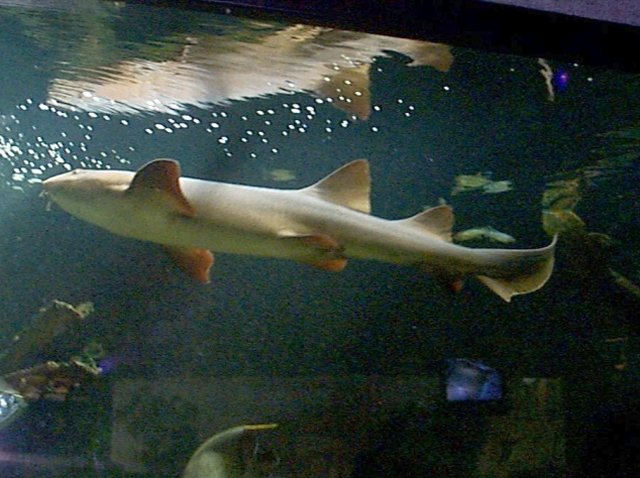
| Physical description:
|
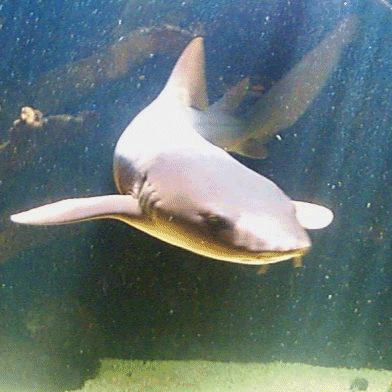
| General information: The nurse shark is an unaggressive creature that in the most part is lazy and peaceful who moves mainly at night. Their small strong teeth are designed fro cracking the shells of molluscs. Feeding involves the use of its pharyngeal cavity to create a suction pressure that will suck small prey from between the rocks. Reproduction for this creature is common among fish. The young are born alive, hatched from eggs that are retained in the mother's uterus "(ovoviviparous)." |
|
Comments about the nurse shark of the Fort WorthZoo: |
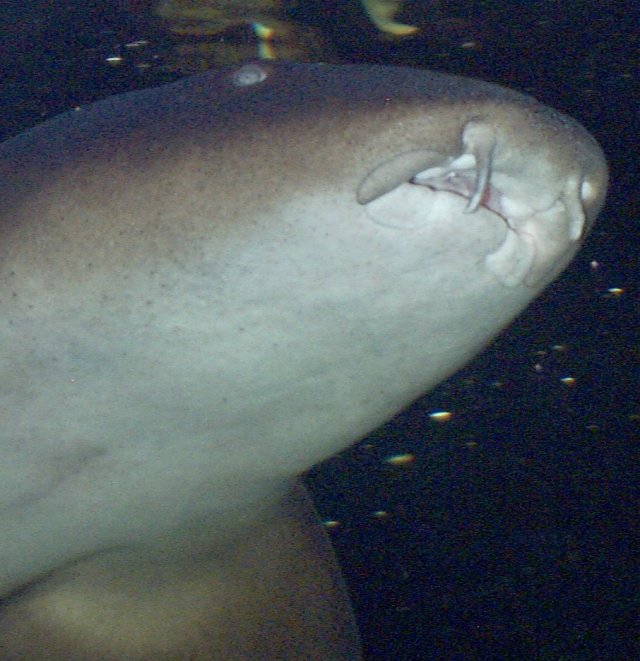
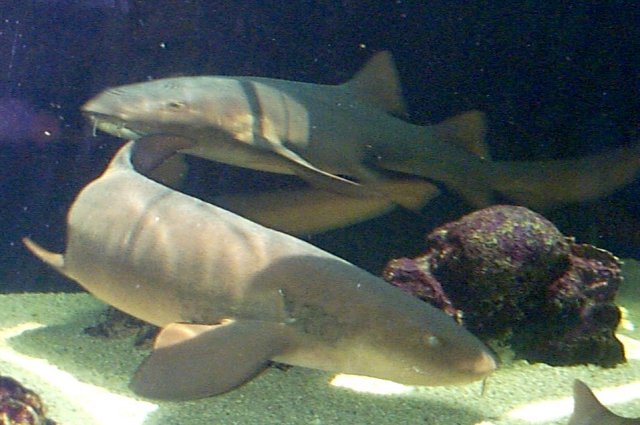
Personal Observations: 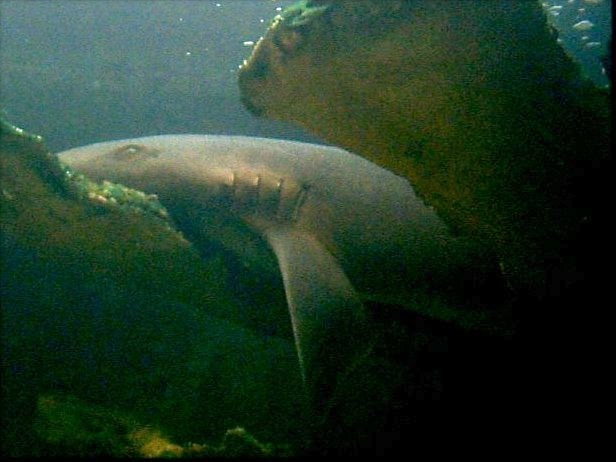 Silence... Sleeping Shark I can vouch for the laziness of the nurse sharkat the zoo. This is a special picture of it sleeping.It seems that it is not quickly motivated nor doesit move hardly at all. In fact, it seems that all it wants to dois lay on the bottom floor "dwelling." I would imagine that timewould go by so much faster if I could have actually been in the water nextto this shark, but from the outside of the glass, a few minutes of waitingfor movement was all I could stand. This definitely is a lazy shark. Perhaps it likes being the center of attention, when people come up tothe glass to look and gaze at it. |
Source Materials and Related Links: |
Page author: |